



What if the U.S. Hadn’t Dropped the Atomic Bombs?
As we learn more about the Second World War, we begin to see that some things we were initially taught may not be entirely accurate. For instance, it’s widely believed that Japan only surrendered due to the atomic bombs dropped on Hiroshima and Nagasaki. Still, the reality is that the two atomic bombs may have been less of a catalyst than they appear to have been.
The question is straightforward: What would have happened if the United States hadn't dropped the bombs on Japan’s cities? Would World War II have concluded when it did? Was there another force approaching in the Pacific Theater to force Japan’s hand?
In this brief look back, we consider what might have happened had the United States chosen a different route.
The Alternative History
What some may picture in an alternative history, where the United States and Japan continued the war in the Pacific without the intervention of the atomic bombs, is the eventual defeat of the US and the triumph of the last remaining Axis power. Very few serious historians consider this at all likely.
Aside from that scenario, and depending on which version of alternative history you listen to, there could have been two outcomes had the United States not dropped the atomic bombs.
The Other Pressure and an Unclear Resolution
There’s a belief that the United States didn’t have to drop the atomic bombs to win the war. By the time the B-29 bomber soared over Hiroshima and deployed the first-ever atomic bomb, Japan’s military seemed to be facing an imminent defeat.
With Nazi Germany and its European Axis partners out of the picture, the Soviet Union turned its attention to Japan and started pushing to join the United States in the Pacific Theater. As a second major power divided Japan’s attention, there was a chance that Japan would have surrendered – but would its military have accepted the decision?
Even with the US deploying the atomic bombs, many Japanese soldiers refused to acknowledge the end of the war. Without that destructive event, it’s possible that a larger portion of Japan’s military would have continued fighting, implementing guerrilla warfare tactics to slowly pick away at their enemies.
The result could have led to many more casualties for both the Allies and Japan, possibly even surpassing the over 200,000 civilians who perished from the bombs. Eventually, after more years of fighting, the war, in all likelihood, would have still ended in the Allies' favor, but not without further losses.

Soviet sailors raise the Red Fleet flag at Port Arthur following the Soviet invasion of Manchuria, China. The invasion began on August 9, 1945. The U.S. had bombed Hiroshima three days prior and bombed Nagasaki also on August 9, 1945.
A Familiar Ending Without the Bang
While several US generals agreed that the atomic bombs were essential to crippling Japan and ending the war, some oppose this belief and claim that Japan’s surrender was inevitable months before.
According to Brigadier General Carter Clarke, the decision was made so the bombs could be tested as an experiment, and had little to do with ending the war.
Major General Curtis LeMay concurred in Clarke's belief that the bomb was unnecessary, stating that the “war would have been over in two weeks without the Russians entering and without the atomic bomb.”
There are many, including Henry H. Arnold of the US Army Air Forces Pacific Fleet and Fleet Admiral Chester W. Nimitz, who pointed to the excessiveness of the bombings, believing that Japan was already on the cusp of surrendering.
The Legacy of the Atomic Bombs
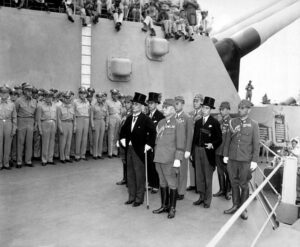
Japanese officials aboard the USS Missouri in Tokyo Bay participate in the surrender ceremonies.
Regardless of what anyone believes about their necessity, the atomic bombs were dropped, over 200,000 Japanese civilians perished in the initial blasts, and World War II ended on September 2nd, 1945.
While the legacy and necessity of the atomic bombs dropped on Japan continue to be hotly debated by historians, politicians, and veterans groups to this day, some have chosen to focus on promoting peace, reconciliation, and honoring the victims and survivors of the War in the Pacific.
Historic Sites of Interest:
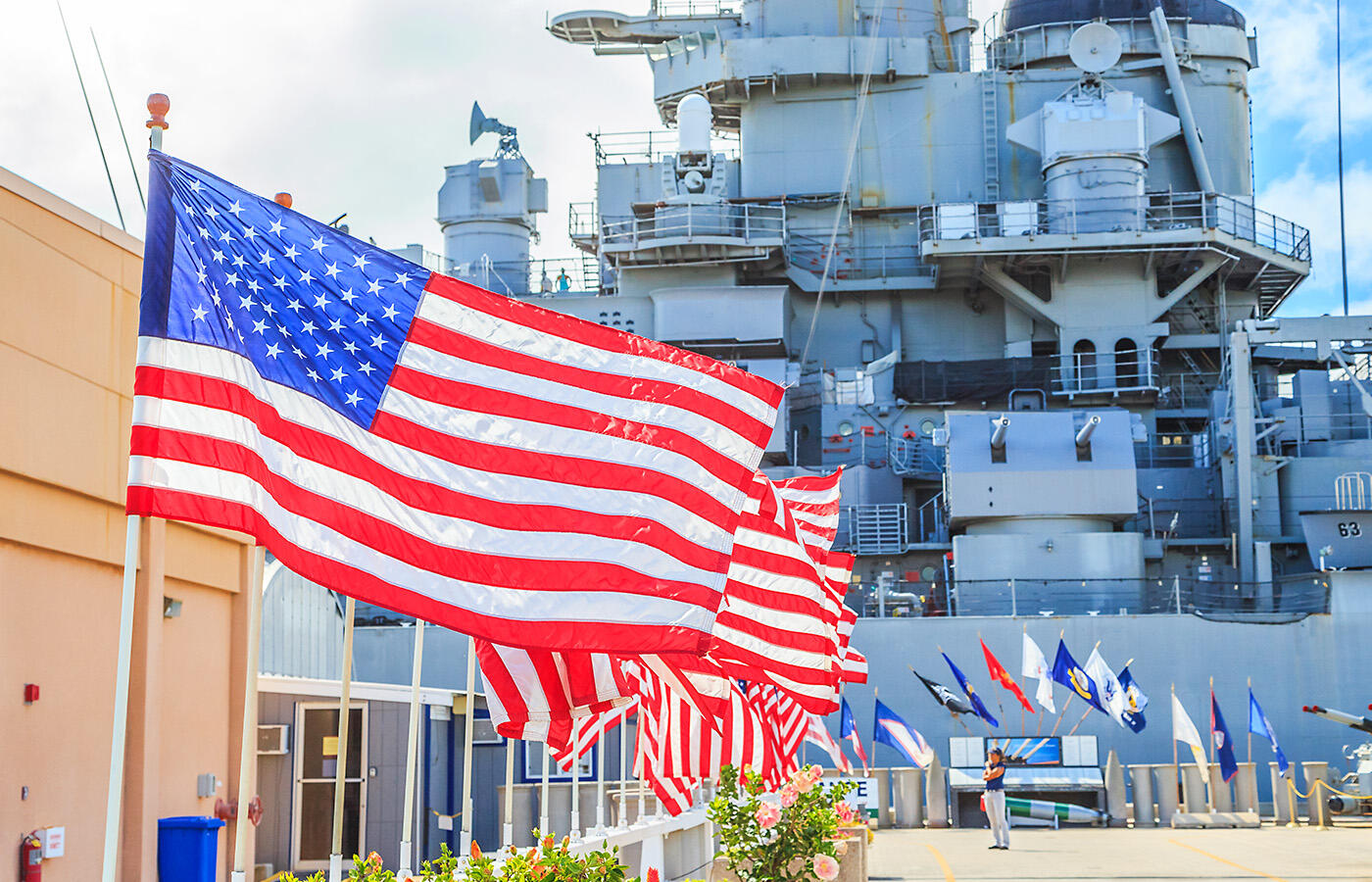
The historic site where Japan’s surrender was signed can be seen on the Battleship Missouri at the World War II Valor in the Pacific National Monument in Pearl Harbor, Oahu.
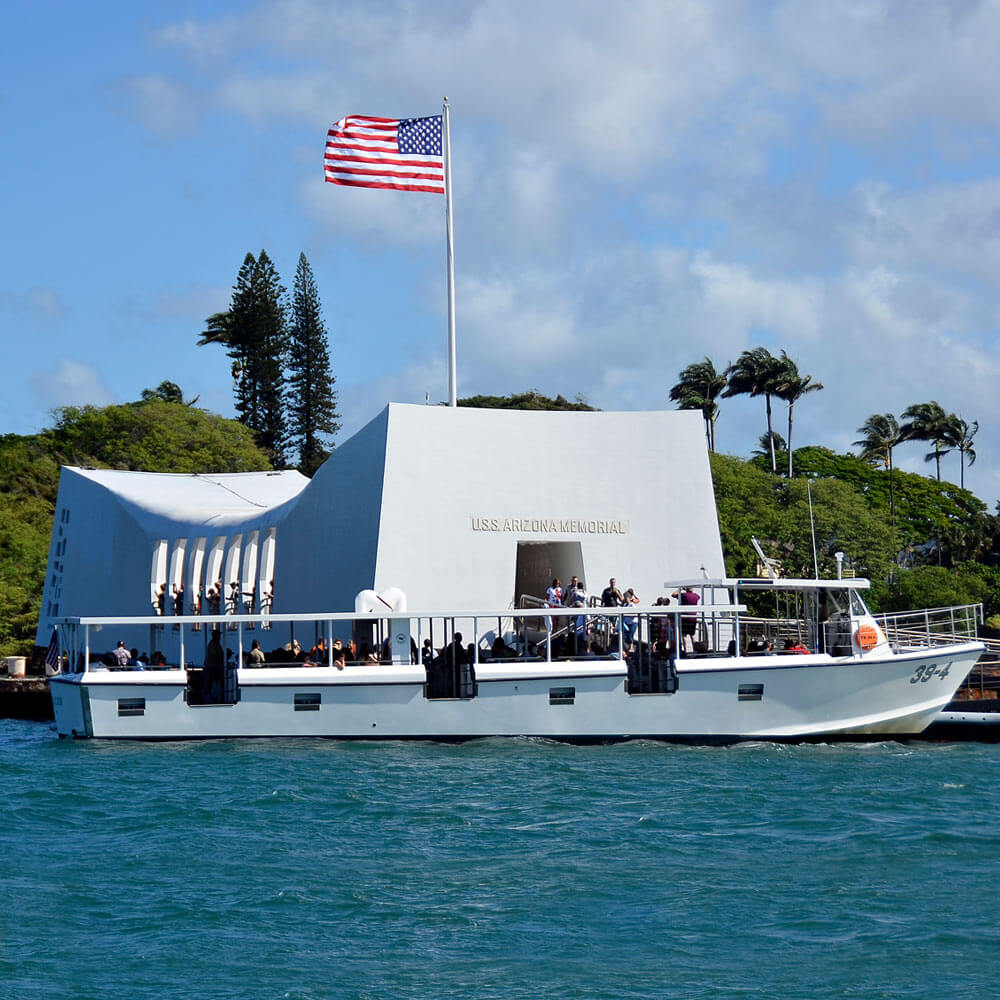
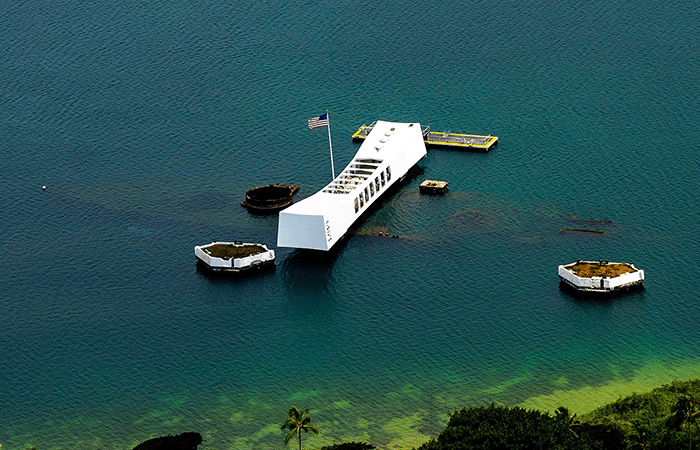
The Pearl Harbor National Memorial regularly collaborates with the Manhattan Project Historical Park and several Japanese peace organizations. The Lights for Peace Ceremony occurs every August. The after-hours ceremony features ranger talks and a shoreline luminary lighting.
The Pearl Harbor Aviation Museum features a paper cranes display, handcrafted by children from around the world to honor the legacy of Sadako Sasaki, who folded more than a thousand origami cranes while suffering from leukemia following the bombing of Hiroshima.
The Enola Gay, the B-29 Superfortress that dropped the first atomic bomb on Hiroshima, is permanently on display at the Smithsonian Institution Air and Space Museum's Steven F. Udvar-Hazy Center in Chantilly, Virginia.
Over the years, there have been many controversies over how the Enola Gay exhibit describes the bombing of Japan, the necessity of the atomic bombs, and the historical context of the era. Today, the exhibit is presented solely as a historic artifact without commentary.
The Peace Memorial Park in Hiroshima, Japan, is a sprawling urban park dedicated to the victims of August 6, 1945, and promoting global peace. The expansive thirty-acre park was built near the epicenter of the blast. An arched monument contains a registry of over 353,000 confirmed victims of the atomic bombs, regardless of nationality. (Including survivors who have since passed).
The park's Flame of Peace, originally lit in 1964, is pledged to burn until every nuclear weapon on Earth is dismantled.

Peace Memorial Park, at the Hiroshima Peace Memorial Museum, Hiroshima, Japan